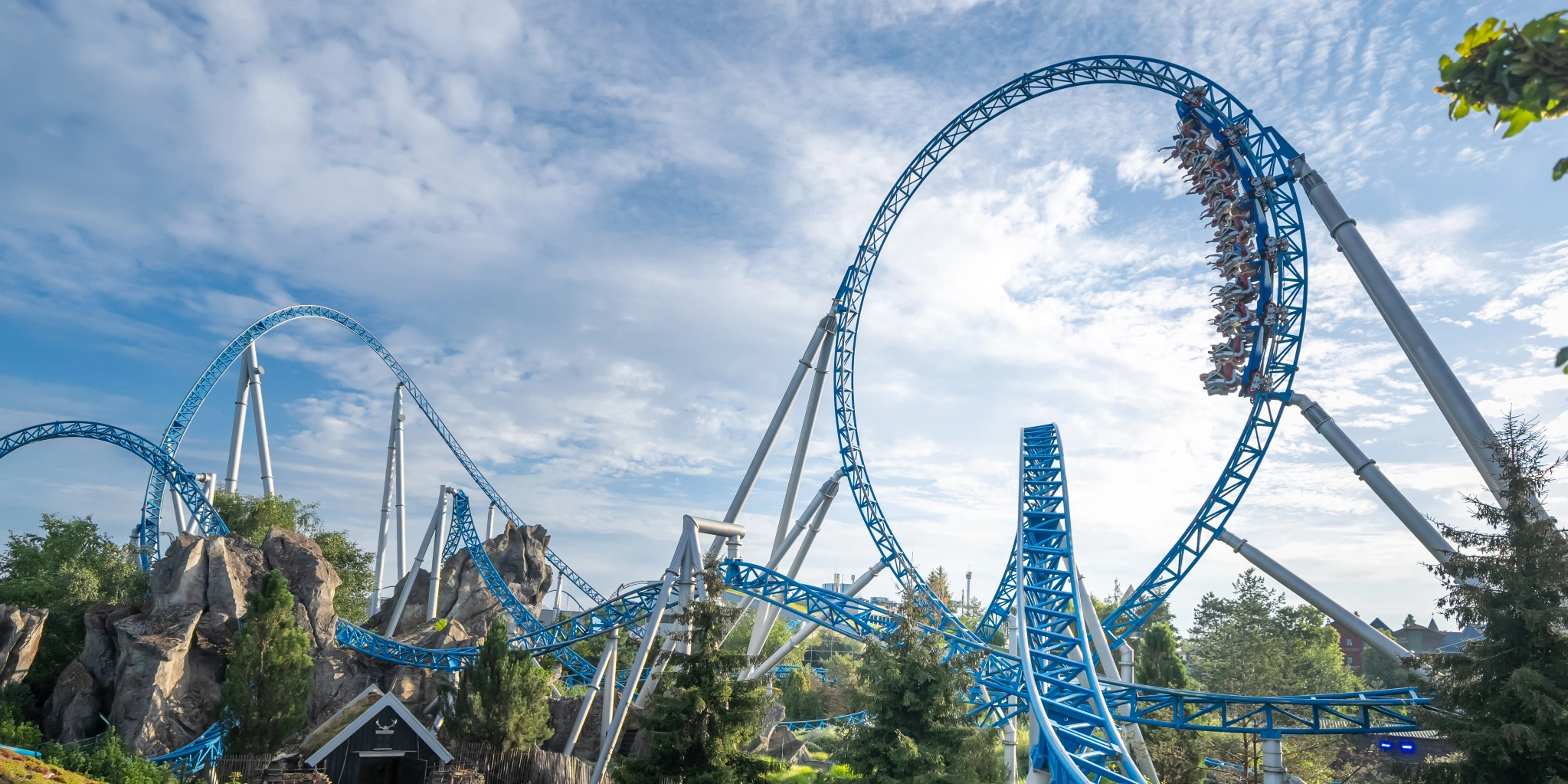
Every year on August 16, roller coaster fans around the world celebrate “Rollercoaster Day.” To mark the occasion, Europa-Park has compiled five exciting facts about these popular adrenaline attractions. The day highlights the fascination with coasters, which play a major role in Germany and especially at Europa-Park.
Europa-Park as a Roller Coaster Stronghold
Europa-Park is a roller coaster stronghold. Among Europe's ten most-visited theme parks, there are on average six roller coasters per park. Europa-Park offers more than double that number with its current 14 rides for young and old, as of 2025. This makes it the clear number one in Germany as well. Adding up the track lengths results in a total distance of around 10 kilometers.
Roller Coasters from the Black Forest Conquer the World
Roller coasters from the Black Forest are conquering the world. The parent company of Europa-Park, MACK Rides, is one of the world's leading roller coaster manufacturers. In the Black Forest town of Waldkirch, 176 coasters have been built so far and exported to places including Australia, Japan, and the Philippines.
Global Distribution of Roller Coasters
There are around 6,600 roller coasters worldwide. According to rcdb.com, 299 of them are in Germany, which rightly earns it the title of roller coaster country. Only China with 1,877 and the USA with 925 have more coasters.
The First Roller Coaster Ideas from Russia
The first ideas for roller coasters originated in Russia. As early as the 16th and 17th centuries, wooden structures were built there, from which people slid down on sleds in winter. Later, wheels were mounted under the vehicles to allow riding without snow. In some languages, roller coasters are still called “Russian Mountains” today.
The Design of Modern Loopings
Loopings are not round. A perfect circular shape would generate excessively high g-forces upon exit. Therefore, modern loopings are teardrop-shaped for greater ride comfort.