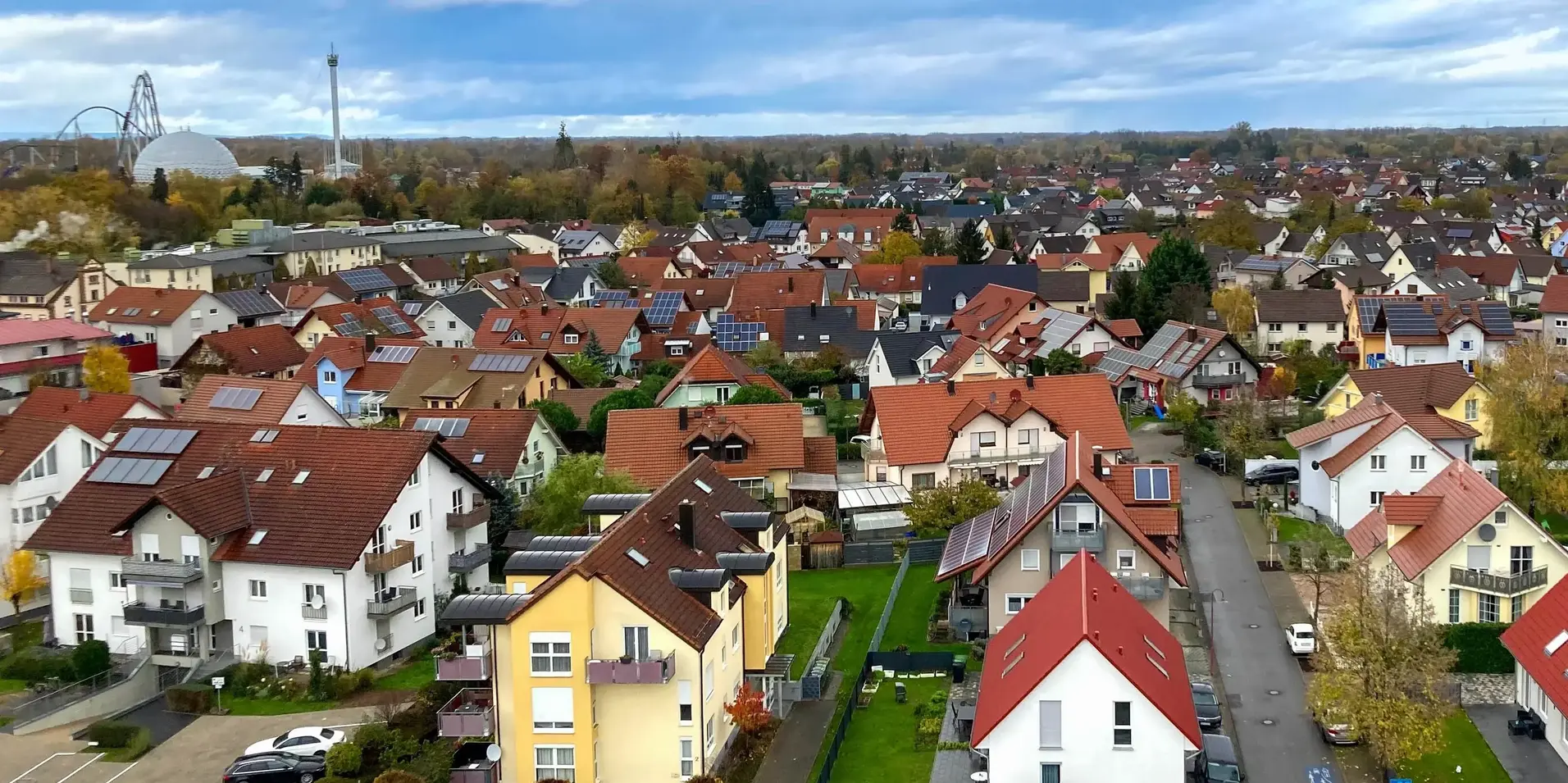
In Rust in the Ortenaukreis, locals have founded the citizens' initiative “Dorf statt Ferienanlage” to combat the increasing construction of vacation rentals around the Europa-Park. The initiative criticizes how mass tourism impairs quality of life, while the municipality plans to limit the number of vacation rentals. Currently, there are 900 such accommodations rented out by 250 hosts in the town with 5,000 inhabitants.
Municipality and Citizens' Initiative Collaborate
The municipality of Rust is in contact with the newly founded citizens' initiative. The criticism has been expressed constructively. Regarding vacation rentals, there is a joint approach involving the citizens' initiative, the municipality, and the municipal council. All parties involved will sit down together soon. The municipality also wants to limit the number of vacation rentals, as press spokesperson Mirko Masen explains. The municipal council does not want things to get out of hand. However, legally, it is not possible to simply close vacation rentals. As for the illegal and unregistered vacation rentals, the municipality intends to track down the landlords together with the Ortenaukreis district office. It cannot be said how many of the 250 hosts actually come from Rust or are external investors. Gerhard Link, as a representative of the citizens' initiative, confirms the contact and the joint approach with the municipality.Statement from the Europa-Park
The Europa-Park states that questions of building development in the town are regulated by the municipal council and the municipal administration. As a regionally rooted family business, the park considers sustainable development in harmony with the citizens important. Otherwise, it exchanges ideas intensively with the municipality on all tourism policy issues.Goals of the Citizens' Initiative
The citizens' initiative “Dorf statt Ferienanlage – Unser Rust soll lebenswert bleiben” advocates for preserving the quality of life, the social fabric, and the village character in Rust. It opposes the increasing conversion of living space into vacation accommodations, excessive soil sealing, and urban development that threatens the townscape and quality of life. The goal is to preserve the social structure, affordable housing, neighborhood, and nature so that Rust retains its village character in the future as well. The initiative's concern is not directed against the Europa-Park, but against the excessive densification and soil sealing in Rust, which changes the village in its structure and quality of life in the long term. A brochure has been printed for the population to illustrate the concerns. The founding of the citizens' initiative is receiving great resonance on social media. The citizens' initiative criticizes that in Rust, more and more large houses with vacation rentals are being planned, since more money can be earned with guests of the Europa-Park than with permanent rentals to locals. The quality of life in Rust is increasingly declining due to more noise, traffic, and waste. In addition, more water and energy are consumed, and the social fabric of the place suffers. Gerhard Link, one of the initiators, emphasizes that the initiative wants to counteract mass tourism in Rust. He is involved because he wants Rust to remain a livable place for the citizens and not gradually turn into a pure vacation complex. It is about a healthy balance, not a fundamental rejection of tourism. If action is not taken now, what makes Rust special will be lost: the home.Criticism of Densification in the Village
In Rust, a worrying trend is emerging, where plots that previously had a single-family house with a garden are increasingly being built up with large-volume multi-party houses or vacation complexes. This subsequent densification often focuses on high-yield vacation rentals, not in the sense of affordable housing for locals. The people in the town feel the consequences, as green spaces disappear, old trees are felled, and retreats as well as natural climate regulation are lost. Narrow distances, high building volumes, and significantly higher occupancy burden the immediate environment through traffic, noise, or the loss of privacy. Many construction projects serve tourist use and promote the displacement of permanent residents, which undermines social interaction in established neighborhoods. Rust risks losing its village identity as a result. Subsequent densification must not mean that the village loses its character, its peace, and its quality of life. Clear rules, transparent procedures, and the political will are needed to put the interests of the citizens ahead of purely commercial goals so that Rust remains livable.Concerns about Soil Sealing
In Rust, soil sealing through new construction projects is advancing relentlessly. Where gardens, green spaces, or undeveloped soils once lay, sealed surfaces of concrete, asphalt, or paving are increasingly emerging for buildings, parking lots, or driveways. Not only is soil lost, but also important ecological functions. Sealed soil can no longer absorb rainwater, which increases the risk of flooding during heavy rain because natural infiltration no longer works. At the same time, the groundwater level drops because precipitation no longer reaches the soil. The natural cooling through evaporation is also lost, and heat buildup in the settlements increases. Rust as a place of recreation is particularly dependent on a balanced microclimate, vibrant green structures, and a functioning water system. Every unnecessary sealing counters these goals. Especially with tourism-motivated large projects that involve many parking spaces and denser development, a disproportionate ecological footprint arises. In addition, there is the loss of habitat for insects, birds, and small mammals, as old trees often have to give way to sealed surfaces. The initiative calls for less concrete, more greening, rainwater management, and responsible handling of our most important asset - the soil, because what is once sealed often remains lost for decades.Consequences of Excessive Tourism
Tourism can enrich economically, culturally, and socially, but when it gets out of hand, the balance tips. In Rust, the excessive expansion of vacation accommodations leads to the loss of the community's original structure. Where neighbors once lived permanently, new guests move in weekly. The constant change brings unrest to the neighborhood, creates noise, increases parking pressure, and changes social interaction. In addition, more and more large-volume new buildings are emerging that are explicitly designed for tourist use, with numerous vacation rentals and parking spaces instead of family-friendly living space and gardens. The citizens' initiative opposes the increasing development for tourist purposes, which threatens the character of the village with vacation rentals, tiny houses, and parking lots. Permanent residents are displaced, and housing for locals becomes scarcer and more expensive. Schools, clubs, and community life suffer when no one settles down in the long term. The infrastructure also reaches its limits through more waste, higher water and energy consumption, and nighttime noise, without the guests participating permanently in the municipal costs. Rust risks becoming a mere backdrop for vacation use. Sustainable tourism means finding the right measure. Binding guidelines, limitations, and a clear commitment to preserving social balance are needed so that the village remains a living space, not just a travel destination.To the website: dorfstattferienanlage.de


