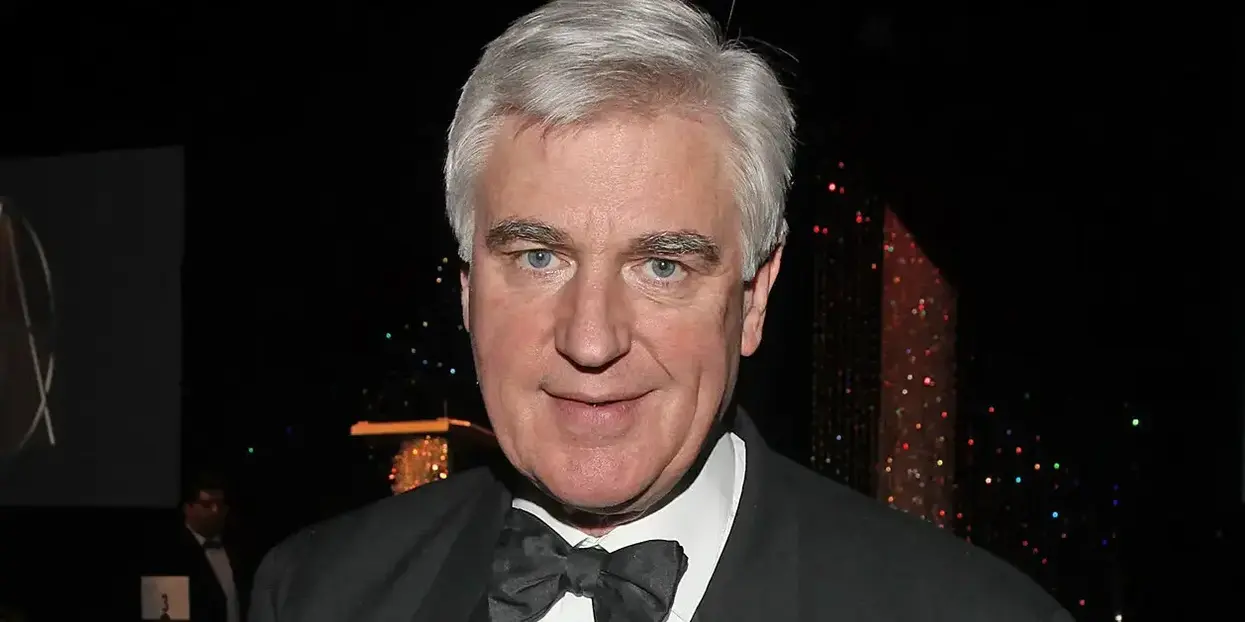
Stuart Craig, the iconic designer of Hogwarts Castle and the Wizarding World of Harry Potter, has died at the age of 83. The three-time Oscar winner passed away on Sunday at his home in Windsor, United Kingdom, due to complications from Parkinson's disease, as confirmed by his colleague Neil Lamont on Facebook. Craig shaped not only the films but also the immersive areas at Universal's Islands of Adventure.
Work on the Harry Potter Films
Craig served as production designer on all eight Harry Potter films and the three spin-offs in the Fantastic Beasts series. In this role, he created the distinctive look of Hogwarts Castle as well as numerous other sets, which are now preserved in the Warner Bros. Studio Tour in Leavesden, United Kingdom. His designs conveyed a magical, ancient world that seamlessly blended with the modern elements of the young characters. The filming primarily took place at the Leavesden Studios near London, where British sensibilities—such as centuries-old cathedrals alongside contemporary shops—played a central role. He and his set decorator Stephenie McMillan were among a handful of people who worked on all eight Harry Potter films and the three Fantastic Beasts prequels, spanning a 21-year period that ended in 2022 with "Fantastic Beasts: The Secrets of Dumbledore." In 1999, Craig was helping set up a nursery for one of his grandchildren when he received a call from director Christopher Columbus, asking if he would collaborate with him on the first Harry Potter film, "Harry Potter and the Philosopher's Stone." Although he had never read the book, he devoured it during the flight from London to Los Angeles, where Columbus was based. “My first reaction was fear: How the hell are we going to pull this off?” he told The Guardian in 2011. His greatest immediate challenge and ultimate success lay in creating a vast, archaic world infused with magic without stifling the modern sensibilities of its young characters. In a way, it helped, as he reflected, that the Harry Potter universe was so deeply rooted in British sensibilities. “It's the most wonderful mix that they wear jeans and T-shirts, use 1950s technology, live in environments from the 13th, 14th, and 15th centuries, and we consciously use these different influences and let eras clash energetically and dynamically,” he told the journal Wide Screen in 2010.
Design of the Theme Park Areas
After the films, Craig turned to designing theme park areas. At the request of J.K. Rowling, the author of the Harry Potter books, he collaborated with Universal Studios to bring the Wizarding World of Harry Potter to life in the resort in Orlando, Florida. His designs for the village of Hogsmeade and Diagon Alley were implemented in the parks, including at Universal's Islands of Adventure. These attractions span two parks and are connected by a ride on the Hogwarts Express. On the tenth anniversary of the opening of the original area at Universal's Islands of Adventure, Craig's colleague Alan Gilmore—who had worked as art director on the Potter films and later for Universal Creative—spoke about the creation of this area. The interview can be read in "Harry Potter and the Day That Changed Theme Parks Forever." Over time, the expansive Potter world grew to include sets away from Hogwarts School of Witchcraft and Wizardry in the Scottish Highlands, such as the massive headquarters of the Ministry of Magic hidden beneath central London. The capabilities of computer-generated imagery also expanded, prompting Craig and his team to learn how to integrate these advances into their design and construction process. “We treat it just like a real set: We design it and draw it, create working construction drawings of it, and hand it over to the visual effects, and they build it digitally,” he told Wide Screen.
Early Career and Awards
Craig's career as a production designer began long before the Harry Potter films and was marked by successes in the film industry. He won Oscars for production design on "Gandhi," "Dangerous Liaisons," and "The English Patient." "Gandhi" is set in India and South Africa in the first half of the 20th century, "Dangerous Liaisons" in 18th-century France, and "The English Patient" in Tuscany and North Africa during World War II. In total, he received eight additional Oscar nominations. He also earned three BAFTA Awards for "The Elephant Man," "Harry Potter and the Goblet of Fire," and "Fantastic Beasts and Where to Find Them," along with 13 further nominations for this British equivalent to the Oscars. Craig built his reputation as one of the greatest living production designers through his work on large-scale historical films.
Personal Life and Education
Stuart Norman Craig was born on April 14, 1942, in Norwich, northeast of London, to Norman and Kate (Ralph) Craig. By his own account, he was an average student but fell in love with set design after painting sets for a local production of "The Yeomen of the Guard," a comic opera by Gilbert and Sullivan. He studied set design at the Royal College of Art in London. After graduating in 1966, he immediately joined the team for "Casino Royale," a James Bond parody starring Peter Sellers. That same year, he married Patricia Stangroom, who survives him, along with their daughters Laura and Becky and four grandchildren.
Rise in the Film Industry
Craig spent most of the 1970s working his way up through the ranks of apprenticeships. His first film as lead production designer was "Saturn 3" (1980), a forgotten sci-fi thriller starring Farrah Fawcett and Kirk Douglas. Critics tore the film apart, but Craig's work was impressive enough to land him the lead production position for the critically acclaimed "The Elephant Man" (1980), the story of a deformed man in late 19th-century London, directed by David Lynch with Anthony Hopkins and John Hurt in the lead roles. It earned him his first Oscar nomination and a BAFTA Award.
Further Successes and Style
Craig's success with "The Elephant Man" propelled him into the pantheon of great set designers and gave him a reputation for meticulous attention to historical details in films with broad thematic and visual landscapes, as seen in films like "Greystoke: The Legend of Tarzan, Lord of the Apes" (1984); "The Mission" (1986), set in 18th-century South America; and "Cry Freedom" (1987), set in apartheid-era South Africa. “I would move a film to work with him,” said director Richard Attenborough, who had worked with Craig on "Gandhi" and "Cry Freedom," in The New York Times in 1993. “Really. He has the most wonderful taste; nothing sticks out.” Craig was equally at home with smaller, more intimate films and settings. He oversaw the design of Attenborough's "The Secret Garden" (1993), based on the popular story by Frances Hodgson Burnett about an orphan, and called his favorite project the film adaptation of the play "Shadowlands" (1993), about writer C.S. Lewis, played by Anthony Hopkins, and the death of Lewis's wife Joy Davidman, portrayed by Debra Winger. “We were able to achieve a level of detail and execution—I hesitate to say perfection—in such small objects as C.S. Lewis's cup, pipe, pipe rack, slippers,” Craig told Sight and Sound in 2005, “of which we had time to consider each one with great fidelity.”